Costa Rica – Artenvielfalt als Staatsziel
aus Parents-Newsletter #47 (März 2026)
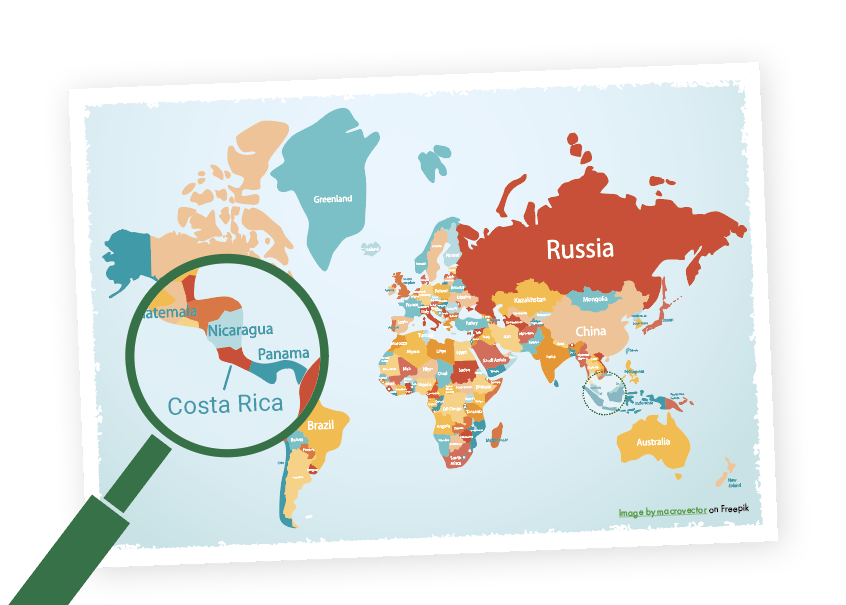
Costa Rica ist ein Staat in Mittelamerika mit einer Fläche von gut 50 000 qkm. Etwa 5 Millionen Menschen leben hier. Im Osten wie im Westen ist es durch Meere begrenzt.
In den 1970er Jahren wurden fast 80 % des nationalen Tropenwaldes abgeholzt – mit verheerenden Auswirkungen für das gesamte Ökosystem des Landes. Doch 1980 machte Costa Rica eine Kehrtwende und erklärte den Naturschutz zum Staatsziel. Es folgten eine intensive Aufforstung und konsequenter Artenschutz. Unterstützt wurde diese Entwicklung durch ein beeindruckendes zivilgesellschaftliches Engagement. Inzwischen ist Costa Rica wieder eines der grünsten und artenreichsten Länder der Erde. 28 % der Landesfläche stehen unter Naturschutz, 90 % der Energie stammt aus erneuerbaren Quellen. 5 % aller weltweiten Spezies sind hier zu finden – auf einer Fläche, die nur wenig größer ist als Niedersachsen.
Das Forschungs- und Ausbildungsinstitut CATIE ist im Landesinneren einer der größten Arbeitsgeber und erforscht und lehrt Nachhaltigkeit, Naturschutz und ökologischen Anbau. Es gilt als eines der weltweit wichtigsten Zentren für tropische Agrarforschung.
Das Beispiel Costa Rica zeigt, dass die Natur sich mit all ihrer Vielfalt wieder erholen kann, wenn sie konsequent geschützt wird – und dass eine stabile Demokratie hierfür eine gute Basis ist. Allerdings stehen die jungen Wälder weiterhin unter Druck durch wirtschaftliche Interessen von Unternehmen und durch den Klimawandel mit all seinen Folgen.
Weitere Informationen:
English version:
Costa Rica – Biodiversity as a national goal
Costa Rica is a Central American country with an area of approximately 50,000 square kilometers. Around 5 million people live here. It is bordered by the sea to both the east and west.
In the 1970s, almost 80% of the national rainforest was cleared – with devastating consequences for the country's entire ecosystem. But in 1980, Costa Rica reversed course and declared nature conservation a national objective. This was followed by intensive reforestation and consistent species protection. This development was supported by impressive civic engagement. Today, Costa Rica is once again one of the greenest and most biodiverse countries in the world. 28% of the country's land area is protected, and 90% of its energy comes from renewable sources. 5% of all the world's species can be found here – in an area only slightly larger than the German state of Lower Saxony.
The CATIE research and training institute is one of the largest employers in the country's interior, researching and teaching sustainability, nature conservation, and organic farming. It is considered one of the world's most important centers for tropical agricultural research.
The example of Costa Rica shows that nature, in all its diversity, can recover when it is consistently protected – and that a stable democracy provides a good foundation for this. However, the young forests continue to be under pressure from the economic interests of companies and from climate change with all its consequences.
Rike, Newsletter-Team
More information:
https://www.naturefund.de/en/projects/costa_rica/project_news